
Medical Disclaimer: This article is AI-assisted and published strictly for general educational purposes in accordance with the National Medical Commission (NMC) guidelines. It does not establish a doctor-patient relationship and does not replace professional medical advice, diagnosis, or treatment. Please consult a qualified healthcare specialist for evaluation specific to your condition.
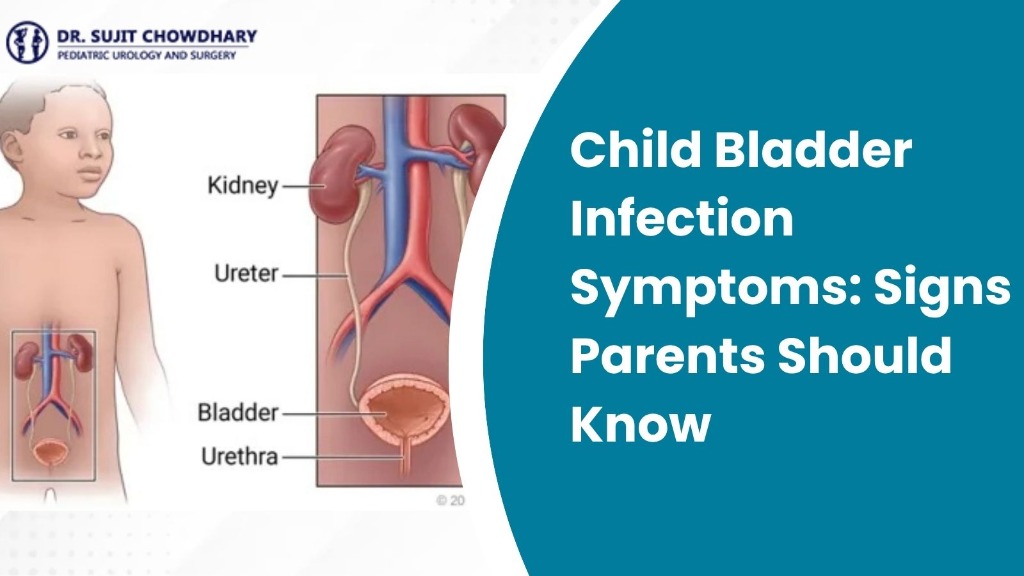
Quick Summary for Parents
Recognizing child bladder infection symptoms (cystitis) early prevents bacterial spread to the kidneys. Common indicators include burning or painful urination (dysuria), sudden urinary frequency, daytime wetting accidents in potty-trained children, cloudy or foul-smelling urine, and lower abdominal discomfort. Prompt diagnosis by a specialist ensures effective clearance and rules out underlying structural reflux.
Introduction: Understanding Pediatric Bladder Infections (Cystitis)
A bladder infection, known medically as acute cystitis, is one of the most frequent bacterial infections encountered during childhood. It occurs when microscopic bacteria—most commonly Escherichia coli (E. coli) originating from the normal bowel flora—colonize the perineal region, enter the urethral meatus, and ascend into the urinary bladder. Once inside the bladder cavity, bacteria adhere to the urothelial lining, producing local inflammation, mucosal swelling, and irritability.
While urinary infections can affect children at any age, they are particularly prevalent among toddlers undergoing toilet training, young girls (due to a shorter urethral distance to the bladder), and infants with underlying urinary tract malformations. Recognizing child bladder infection symptoms early is paramount because an untreated lower urinary tract infection can travel higher up the ureters to cause a severe kidney infection (pyelonephritis), potentially leading to permanent renal parenchymal scarring and hypertension.
If your child complains of discomfort while urinating or develops sudden voiding changes, seeking specialized care for Urinary Tract Infection Treatment in Delhi under an internationally recognized expert like Dr. Sujit Chowdhary ensures accurate laboratory testing, relief from pain, and complete evaluation of bladder health across all Pediatric Urology Services.
Is Your Child Experiencing Painful Urination or Wetting Accidents?
Get a comprehensive diagnostic evaluation and expert pediatric UTI treatment with Dr. Sujit Chowdhary.
Book a ConsultationPrimary Signs & Symptoms Parents Should Watch For
The clinical presentation of a bladder infection varies depending on the child's developmental age, verbal capability, and overall health status:
1. Pain or Burning During Urination (Dysuria)
The hallmark symptom of pediatric cystitis symptoms is sharp pain, burning, or stinging sensations while passing urine. Young children may cry, grimace, express fear of using the toilet, or actively hold back their urine to avoid discomfort.
2. Sudden Urinary Frequency & Urgency
Infected bladder walls become hyper-irritable and hyper-reactive. Children may feel an overwhelming, sudden urge to pass urine every 15 to 30 minutes throughout the day, often voiding only a few droplets at a time.
3. Daytime Wetting Accidents & Bedwetting
A child who has been fully potty-trained for months or years may suddenly experience new-onset daytime wetting accidents in children or secondary bedwetting (enuresis) due to involuntary bladder spasms caused by bacterial mucosal inflammation.
4. Urine Discoloration & Unusual Odor
Parents changing diapers or assisting in the bathroom should note distinct changes in urine appearance:
- Cloudy or Hazy Appearance: Caused by the presence of white blood cells (pus/pyuria), shed epithelial cells, and bacterial clusters.
- Pungent or Foul Odor: A distinctly strong, fishy, or ammonia-like smell indicating active bacterial metabolic waste.
- Pink or Red Tint (Hematuria): Microscopic or visible blood droplets stemming from inflamed, raw bladder mucosal blood vessels.
5. Lower Abdominal or Pelvic Discomfort
Children often complain of a dull ache, pressure, or cramping located in the lower belly just above the pubic bone. They may hold their abdomen while trying to void or squirm uncomfortably while seated.
6. Symptoms in Infants and Non-Verbal Toddlers
Because infants cannot describe burning sensations, signs of UTI in children under 2 years of age are frequently non-specific, including:
- Unexplained low-grade or high fever without respiratory cold symptoms
- Persistent irritability, fussiness, or inconsolable crying during diaper changes
- Poor feeding, weak sucking, nausea, and vomiting
- Failure to gain weight or lethargy
Comparison Table: Bladder Infection (Cystitis) vs. Kidney Infection (Pyelonephritis)
| Clinical Feature | Bladder Infection (Lower UTI / Cystitis) | Kidney Infection (Upper UTI / Pyelonephritis) |
|---|---|---|
| Primary Infection Site | Urinary Bladder & Urethra | Renal Pelvis & Kidney Parenchyma |
| Fever Pattern | Absent, mild, or low-grade (<38°C / 100.4°F) | High-grade fever (>38.5°C / 101.3°F) with chills & rigors |
| Pain Location | Lower abdomen, pelvic area, or urethral burning | Flank pain, side pain, or upper back tenderness |
| Systemic Illness | Minimal; child remains active between voiding | Severe; nausea, vomiting, lethargy, loss of appetite |
| Risk of Renal Scarring | Extremely Low | Significant risk if treatment is delayed |
Underlying Risk Factors for Recurrent Bladder Infections
While a single bladder infection can occur spontaneously, recurrent bladder infections in toddlers often stem from functional voiding habits or structural urological anomalies that hinder complete urine clearance:
- Vesicoureteric Reflux (VUR): A congenital condition where urine flows backward from the bladder into the kidneys due to an incompetent valvular junction. Learn about Vesicoureteric Reflux (VUR) Management.
- Dysfunctional Elimination Syndrome & Constipation: A hard stool mass in the rectum compresses the bladder neck, preventing complete emptying and leaving stagnant urine behind as a breeding ground for bacteria.
- Voiding Postponement: Children engaged in play often delay bathroom trips, causing overstretching of the bladder wall, reduced blood flow, and bacterial overgrowth.
- Neuropathic Bladder: Nerve supply variations affecting bladder contraction and sphincter coordination. Read more on Neuropathic Bladder Care.
- Structural Obstructions: Conditions such as PUJO, Posterior Urethral Valves (PUV), Pediatric Hydronephrosis, or Pediatric Kidney Stones that disrupt normal urinary drainage.
- Hygiene Factors & Bubble Baths: Harsh perfumed soap bubble baths can irritate the urethral meatus, while improper back-to-front wiping introduces enteric bacteria directly to the urethra.
Diagnostic Evaluation & Urine Testing
Accurate diagnosis by a senior Pediatric Urologist in Delhi NCR involves specific non-invasive laboratory evaluations and imaging:
- Urinalysis (Dipstick & Microscopy): Checks for leukocyte esterase (white blood cells), nitrites (bacterial byproduct), and red blood cells.
- Quantitative Urine Culture: The definitive gold-standard test that identifies the exact bacterial organism and determines specific antibiotic sensitivities.
- Renal & Bladder Ultrasound: Performed after clearance of infection to assess kidney structure, bladder wall thickness, and post-void residual urine.
- Voiding Cystourethrogram (MCU / VCUG): Recommended for infants or children with febrile or recurrent UTIs to evaluate for Vesicoureteric Reflux or structural obstruction.
Treatment Options & Prevention Strategies
Effective management focuses on clearing the immediate bacterial infection and implementing robust long-term preventive measures:
1. Targeted Antibiotic Therapy
Bacterial bladder infections require a full course of culture-guided oral antibiotics prescribed by a specialist. Completing the entire course is essential to eliminate bacteria completely and prevent drug resistance.
2. Hydration & Bladder Flushing
Encourage your child to drink generous amounts of water throughout the day. Frequent voiding flushes bacteria out of the urinary tract naturally before colonies can attach to the bladder mucosa.
3. Bowel & Bladder Re-Education
Establish a regular timed voiding schedule every 2 to 3 hours during waking hours. Treat underlying constipation aggressively with high-fiber foods, adequate water, and gentle stool softeners to optimize bladder neck relaxation.
Final Thoughts
Recognizing child bladder infection symptoms early allows parents to seek effective medical treatment before minor bladder irritation escalates into a serious kidney infection. Most childhood UTIs resolve completely with targeted antibiotics, proper hydration, and healthy voiding habits. For expert diagnostic testing and long-term preventive guidance, consult leading specialist Dr. Sujit Chowdhary to safeguard your child's urological health.
Protect Your Child's Urinary Health Today
Consult with senior pediatric urologist Dr. Sujit Chowdhary for comprehensive UTI evaluation and expert care in New Delhi.
Book a ConsultationFrequently Asked Questions (FAQs)
What are the common symptoms of a bladder infection in a child?
Common symptoms include pain or burning during urination, frequent urge to void, daytime wetting accidents in potty-trained children, cloudy or foul-smelling urine, lower abdominal pain, and mild fever.
How does a bladder infection differ from a kidney infection in children?
A bladder infection (cystitis) affects the lower urinary tract, causing local symptoms like burning and urgency. A kidney infection (pyelonephritis) involves the upper tract, causing high fever, severe flank/back pain, vomiting, and potential renal scarring.
Why do children get bladder infections?
Bladder infections occur when bacteria (most commonly E. coli) enter the urethra and multiply in the bladder. Risk factors include constipation, holding urine, incomplete bladder emptying, poor hygiene, or underlying structural reflux (VUR).
Can constipation cause bladder infections in children?
Yes. A hard stool mass in the rectum compresses the adjacent bladder, preventing complete emptying. Stagnant urine remaining in the bladder creates an ideal environment for bacterial proliferation.
How are child bladder infections diagnosed?
Diagnosis involves a urinalysis to check for white blood cells and nitrites, followed by a quantitative urine culture to identify the exact bacteria and determine effective antibiotic therapy.
What should parents do if a child has recurrent bladder infections?
Children with recurrent UTIs require a thorough evaluation by a pediatric urologist, including a renal ultrasound and VCUG scan to rule out Vesicoureteric Reflux (VUR) or anatomical blockages.
Are antibiotics always required for pediatric bladder infections?
Yes. Bacterial bladder infections in children require a full course of doctor-prescribed antibiotics to eradicate the bacteria and prevent the infection from spreading upward to the kidneys.
How can parents prevent future bladder infections in children?
Prevention involves encouraging plentiful fluid intake, establishing a regular timed voiding schedule (every 2 hours), treating constipation promptly, teaching front-to-back wiping, and avoiding bubble baths.