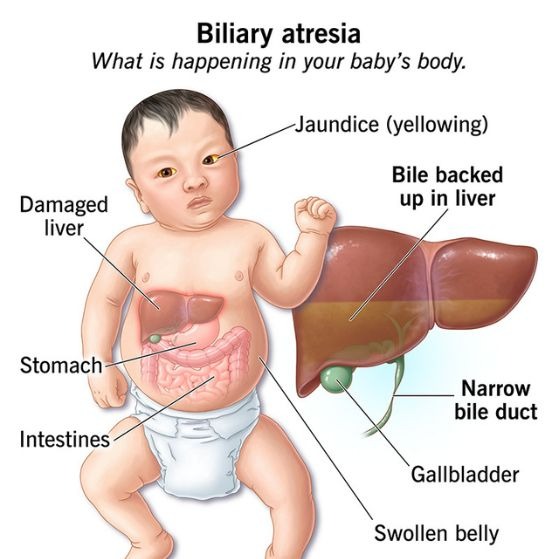
Biliary atresia is a life-threatening liver disease in infants where the bile ducts inside or outside the liver become inflamed, narrow, or completely blocked. This prevents bile (a digestive fluid) from draining into the gallbladder and small intestine, causing bile to back up and damage liver cells. Parents seeking specialized biliary atresia treatment in Delhi should consult an experienced pediatric surgeon immediately to prevent irreversible liver scarring and liver failure.
The exact cause of biliary atresia is still under investigation, but research points to several potential triggers:
Symptoms typically develop between two to eight weeks after birth:
Time is of the essence when treating Biliary Atresia. If the Kasai procedure is performed within the first 60 days of life, the success rate for establishing bile flow is significantly higher. Delayed surgery increases the risk of irreversible liver cirrhosis, making a liver transplant the only viable option. Early screening and prompt surgical care are crucial to preserving the infant's native liver.
Our care extends beyond the operating room. We offer specialized nutritional support, as infants with Biliary Atresia often struggle to absorb essential fats and vitamins. Continuous monitoring by our paediatric hepatology team ensures that any signs of cholangitis or portal hypertension are managed immediately, providing optimal quality of life for your child.
A surgical bypass that connects a loop of the small intestine directly to the liver to restore bile drainage.
Specialized formulas and vitamin supplements to support growth and development despite impaired bile flow.
Ongoing assessment and preparation for a potential liver transplant if the Kasai procedure is insufficient.
Includes blood tests, liver ultrasound, and often a HIDA scan or liver biopsy to confirm the diagnosis and rule out other causes of jaundice.
Performed under general anesthesia, where the damaged bile ducts are bypassed using the infant's own intestine to restore bile flow.
Focuses on nutrition and preventing infections (cholangitis). Long-term monitoring of liver function is essential for a healthy outcome.

When parents seek specialized care for Biliary Atresia Treatment in Delhi, experience in complex neonatal hepatobiliary reconstruction is the most critical factor in achieving a successful outcome.
Biliary atresia is a rare, life-threatening liver condition in infants where the bile ducts outside or inside the liver become inflamed and blocked. This prevents bile from draining into the intestines to digest fats, leading to bile accumulation in the liver, jaundice, and progressive liver cirrhosis if not treated early.
The Kasai procedure is the primary surgical treatment for biliary atresia. During surgery, the damaged external bile ducts are removed, and a loop of the infant's small intestine is attached directly to the liver surface (portoenterostomy) to establish a new pathway for bile drainage.
Early surgical intervention is critical. The Kasai procedure yields the highest success rate when performed before 60 days (2 months) of age. Operating early prevents irreversible liver scarring and maximizes the chance of restoring normal bile flow.
Key warning signs in infants include persistent jaundice (yellowish skin and eyes) lasting beyond 2 weeks of life, pale clay-colored or white stools, dark tea-colored urine, and an enlarged, firm abdomen due to liver swelling.
A successful Kasai procedure can restore bile flow and preserve native liver function for many years, delaying or avoiding the need for a liver transplant. However, some children who develop progressive liver scarring over time may eventually require a liver transplant in later childhood.
Infants typically stay in the hospital for 7 to 10 days post-surgery. During this time, the surgical team monitors bile drainage, provides intravenous nutrition, manages post-op recovery, and starts special medications to encourage bile flow.
Long-term care involves daily fat-soluble vitamin supplements (A, D, E, K), high-calorie infant formulas, preventive antibiotic therapy to protect against bile duct infections (cholangitis), and regular follow-ups with a pediatric surgical specialist.
Early Kasai surgery is critical for restoring bile flow in biliary atresia. Schedule a consultation today.
D6, Club, 2, opposite Vasant Vihar, Vasant Vihar, New Delhi, Delhi 110057
+91 98732 06761
