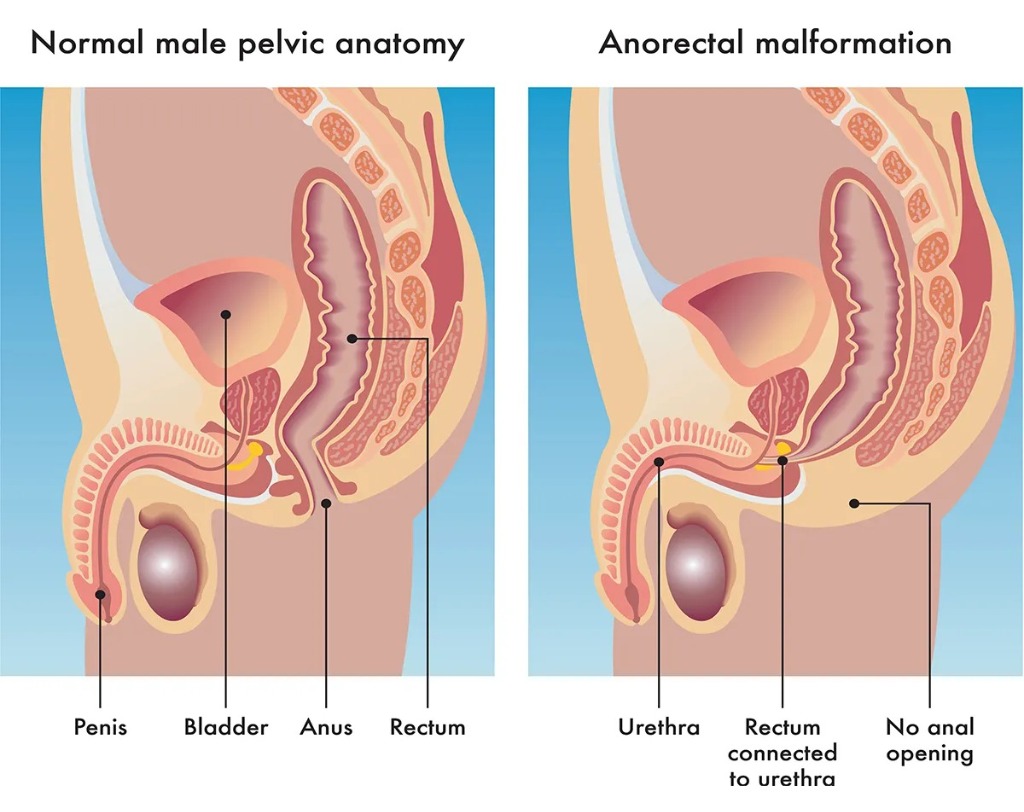
An anorectal malformation (ARM) or imperforate anus is a spectrum of congenital birth defects where the anus and rectum do not form properly. In these conditions, the normal anal opening is absent, misplaced, or severely narrow. Frequently, the rectum connects to other pelvic organs (such as the urethra, urinary bladder, or vagina) through an abnormal fistula tract. Comprehensive Anorectal Malformation treatment in Delhi provides staged reconstructive surgery to establish a functional anal opening and achieve long-term bowel continence.
ARM develops early in pregnancy (between the 5th and 12th weeks) during hindgut division. Key contributing factors include:
Neonatal clinical signs observed shortly after birth include:
Micro-surgical posterior sagittal approach to carefully expose pelvic sphincter muscles, disconnect fistulas, and position the rectum in the muscle center.
A temporary newborn procedure for high defects to divert stool safely, preventing infection while preparing for main reconstructive surgery.
Advanced keyhole surgical pull-through for high rectourethral defects, using camera magnification to guide the rectum with minimal muscle trauma.
Performed at birth for high defects to relieve obstruction. Low-type defects undergo primary newborn anoplasty.
Performed at 2–6 months (PSARP or LAARP) to reconstruct the anus within the sphincter complex and close urinary fistulas.
Routine anal dilations ensure normal sizing, followed by colostomy reversal surgery 8–12 weeks later for full normal bowel flow.

When parents seek an experienced Anorectal Malformation doctor in Delhi, expert micro-reconstructive surgery (such as PSARP or laparoscopic LAARP) combined with a structured long-term bowel management program ensures optimal continence and quality of life for the child.
Anorectal Malformation (ARM) is a congenital anomaly where the anus and rectum fail to develop properly during early fetal gestation, resulting in an absent anal opening or an ectopic fistula opening into adjacent pelvic structures.
Yes, an evaluation within the first 24 to 48 hours of life is essential. High-type defects require a temporary colostomy to divert stool safely, whereas lower-type defects can often undergo primary anoplasty.
Posterior Sagittal Anorectoplasty (PSARP) is the gold-standard surgical reconstruction for ARM. The surgeon carefully identifies the pelvic muscle sphincter complex and places the mobilized rectal pouch directly within the muscle center to optimize future bowel control.
Laparoscopic-Assisted Anorectal Pull-through (LAARP) is an advanced keyhole surgical technique used for high rectourethral fistulas, allowing high-definition camera visualization to dissect the rectum and pull it down with minimal muscle disruption.
After anoplasty or PSARP, routine home dilations using smooth Hegar dilators are performed for several weeks to prevent surgical scar tissue from contracting and narrowing the new anal orifice.
Colostomy closure (reversal) is typically performed 8 to 12 weeks after the main pull-through surgery (PSARP/LAARP) once full anal healing and adequate dilation sizing have been confirmed.
Children with low defects almost always achieve complete fecal continence. Children with higher defects or associated sacral anomalies benefit greatly from a structured pediatric bowel management protocol to prevent constipation and ensure clean, confident daily routines.
Specialized reconstructive surgery offers optimal outcomes for anorectal malformation. Schedule a consultation today.
D6, Club, 2, opposite Vasant Vihar, Vasant Vihar, New Delhi, Delhi 110057
+91 98732 06761
