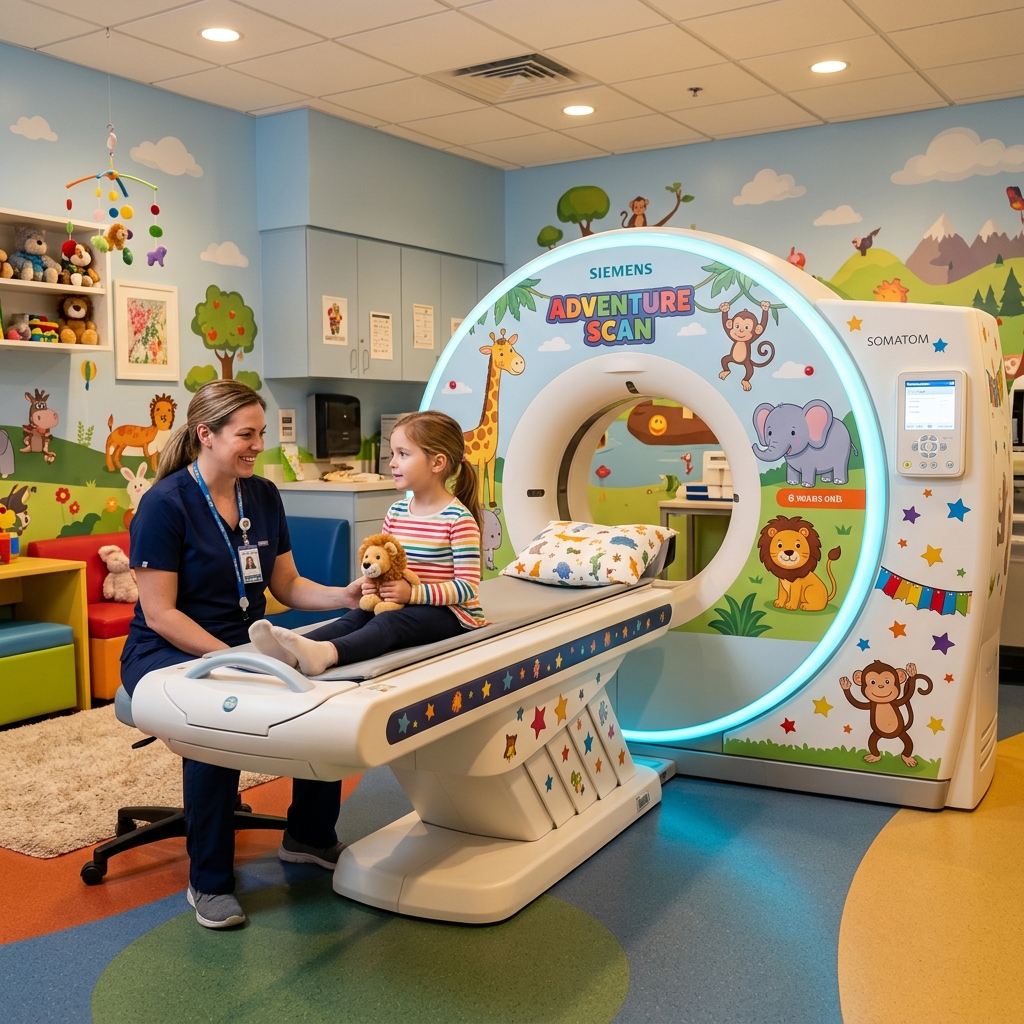
Adrenal tumors in children are rare growths that form on the adrenal glands, which sit on top of the kidneys. The most common type is neuroblastoma (arising from the adrenal medulla), followed by rarer adrenocortical tumors (adenomas or carcinomas) and pheochromocytomas. These tumors can affect hormone production and require specialized multi-disciplinary care.
Most pediatric adrenal tumors occur due to genetic predisposition, inherited syndromes, or spontaneous gene mutations during development. Key contributing factors include:
Signs vary depending on the tumor type and whether it secretes excess hormones:
Minimally invasive removal of the adrenal gland using robotic arms for precise dissection near the vena cava.
Pre-operative medication controls hormone levels to ensure safety during anesthesia.
Carefully separating the adrenal tumor from the underlying kidney, avoiding the need to remove the kidney.
Blood and urine tests measure catecholamines and hormone levels. CT/MRI scans locate the tumor's vessel boundaries.
The adrenal gland is carefully isolated from the kidney and major vessels. The tumor blood supply is clipped first.
Close post-operative monitoring in the PICU to manage blood pressure stabilization and hormone baseline recovery.
"We were devastated when our daughter was diagnosed with a neuroblastoma. Dr. Sujit Chowdhary coordinated her surgery perfectly. Today she is cancer-free."
"Our son's pheochromocytoma was causing severe hypertension. Dr. Sujit stabilized him and did a laparoscopic adrenalectomy. Outstanding results."
"Dr. Chowdhary's expertise in robotic adrenalectomy is outstanding. The keyhole incisions healed beautifully, and recovery was incredibly fast."
"The precision in Dr. Chowdhary's surgery is incredible. His confidence gave us immense peace of mind during a very stressful time."
"We traveled from another city just for Dr. Chowdhary. His approach is very scientific and methodical yet very caring."

Adrenal masses require specialized excision and hormone monitoring. Minimally invasive adrenalectomy speeds up child recovery.
Not always. While neuroblastomas are malignant, many adrenocortical tumors or pheochromocytomas can be benign, though they still require removal.
Yes, since the adrenal gland sits adjacent to the kidney but has its own separate capsule, the kidney is successfully preserved in almost all cases.
For smaller, well-localized adrenal tumors, minimally invasive laparoscopic or robotic-assisted surgery is highly effective, leading to faster recovery.
It is a rare adrenal tumor that secretes hormones (adrenaline), causing symptoms like severe high blood pressure and rapid heart rate.
Certain tumors (like pheochromocytomas) require pre-operative medication to stabilize blood pressure before surgical removal.
Typically, children stay in the hospital for 3 to 5 days, depending on whether the surgery was laparoscopic or open.
If only one adrenal gland is removed, the remaining healthy gland takes over, and hormone replacement is generally not required.
Surgical removal of adrenal tumors is key to protecting your child's health. Schedule a consultation today.
D6, Club, 2, opposite Vasant Vihar, Vasant Vihar, New Delhi, Delhi 110057
+91 98732 06761
