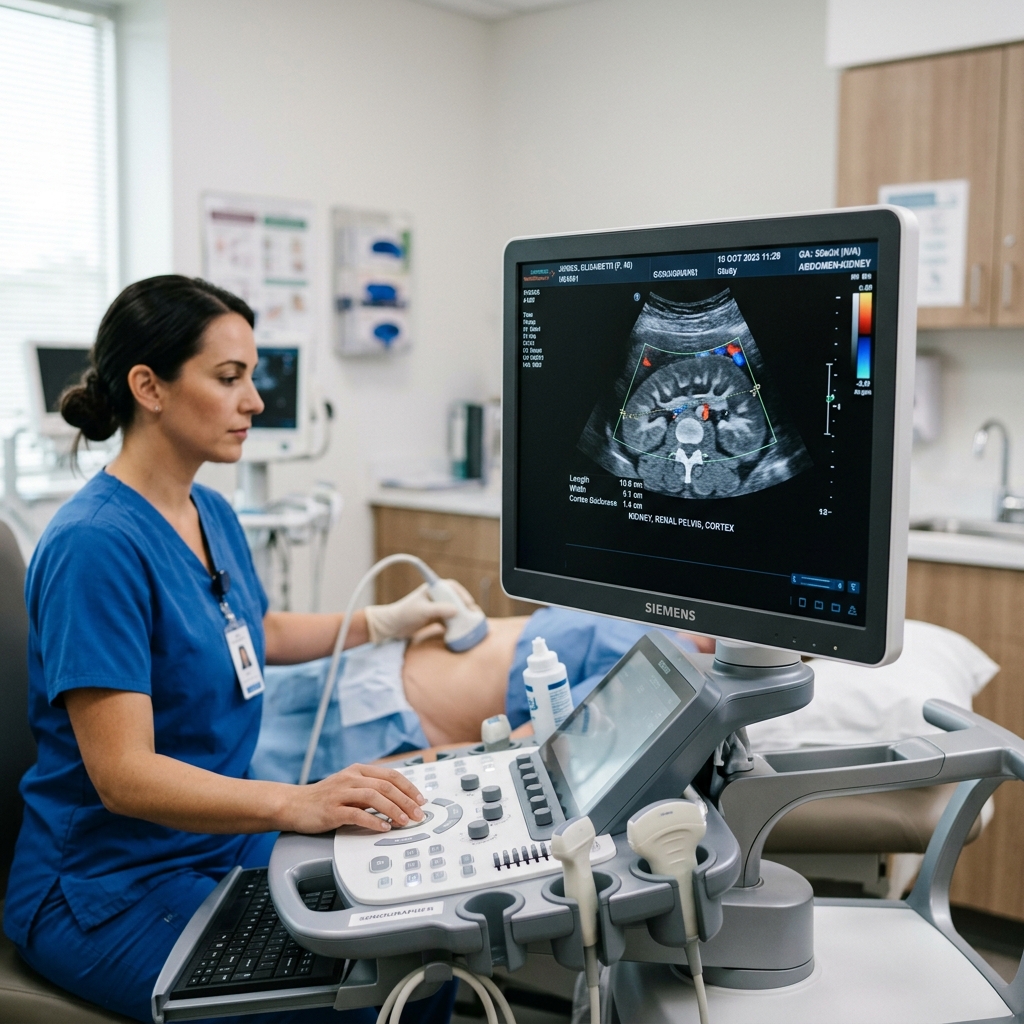
Pediatric stone disease (urolithiasis) is the formation of solid mineral deposits (stones) in the kidneys, ureters, or bladder of children. Endourology uses tiny endoscopes inserted through natural passages (urethra) to locate and fragment these stones without incisions.
Stones form due to mineral accumulation in the urinary tract. Causes include:
Children present with symptoms that differ from adults:
Using a flexible endoscope and Holmium laser to vaporize kidney stones into fine dust without incisions.
A miniature keyhole entry through the back to break and vacuum out large kidney stones.
Analyzing stone composition and urine parameters to design preventative diets and medical therapies.
High-resolution ultrasound or low-dose non-contrast CT scan to locate the stones and measure their density.
Daycare or short-stay endoscopic surgery to pulverize the stones. A temporary internal stent (DJ stent) is placed.
Stent removal after 1-2 weeks, followed by a metabolic workup to check calcium, oxalate, and uric acid levels.
"Our 6-year-old had a painful kidney stone. Dr. Sujit performed laser lithotripsy (RIRS) and cleared the stone completely without any incision. Brilliant care!"
"Minimally invasive cystoscopy for bladder stone removal was done as a daycare procedure. Our son recovered within 24 hours. Very satisfied."
"Dr. Chowdhary's approach to childhood stone prevention through metabolic testing is very scientific and has helped prevent recurrence."
"The precision in Dr. Chowdhary's surgery is incredible. His confidence gave us immense peace of mind during a very stressful time."
"We traveled from another city just for Dr. Chowdhary. His approach is very scientific and methodical yet very caring."
Urinary stones in children require miniaturized equipment and laser precision. Active metabolic screening helps prevent future recurrences.
Kidney stones are less common in children than adults, but their incidence is rising due to dietary factors and metabolic abnormalities.
Symptoms include severe flank or abdominal pain, blood in the urine (hematuria), nausea, vomiting, and recurrent UTIs.
PCNL is a minimally invasive procedure where a small scope is inserted through a tiny back incision to break and remove large kidney stones.
Mini-PCNL uses ultra-thin instruments (miniaturized scopes) designed specifically to perform safe stone removal in infants and young children.
RIRS is a stitchless procedure where a flexible laser scope is passed through the urethra into the kidney to dust stones.
Prevention involves a metabolic workup (24-hour urine test), increased fluid intake, reduced sodium diet, and specific medical therapy.
A temporary soft tube (DJ Stent) is often left in place for 1 to 2 weeks to ensure urine flows freely while the ureter heals.
Stitchless endourology and laser therapy safely clear pediatric kidney stones. Schedule a consultation today.
D6, Club, 2, opposite Vasant Vihar, Vasant Vihar, New Delhi, Delhi 110057
+91 98732 06761
